Worth remembering
- On this course the height of the drop beneath a line changes how a crossing feels far more than the distance from one platform to the next.
- The park crosses Canyon Učja in a series of runs, each from its own platform, so the afternoon is broken into stages rather than a single crossing.
- One guide sends you off the platform and checks your harness, and another waits at the far side specifically to slow you and bring you in safely.
- The booking runs three hours from the sports centre in Bovec and back, including the drive up to the canyon, the kit and the safety briefing.
The Push Off the Platform
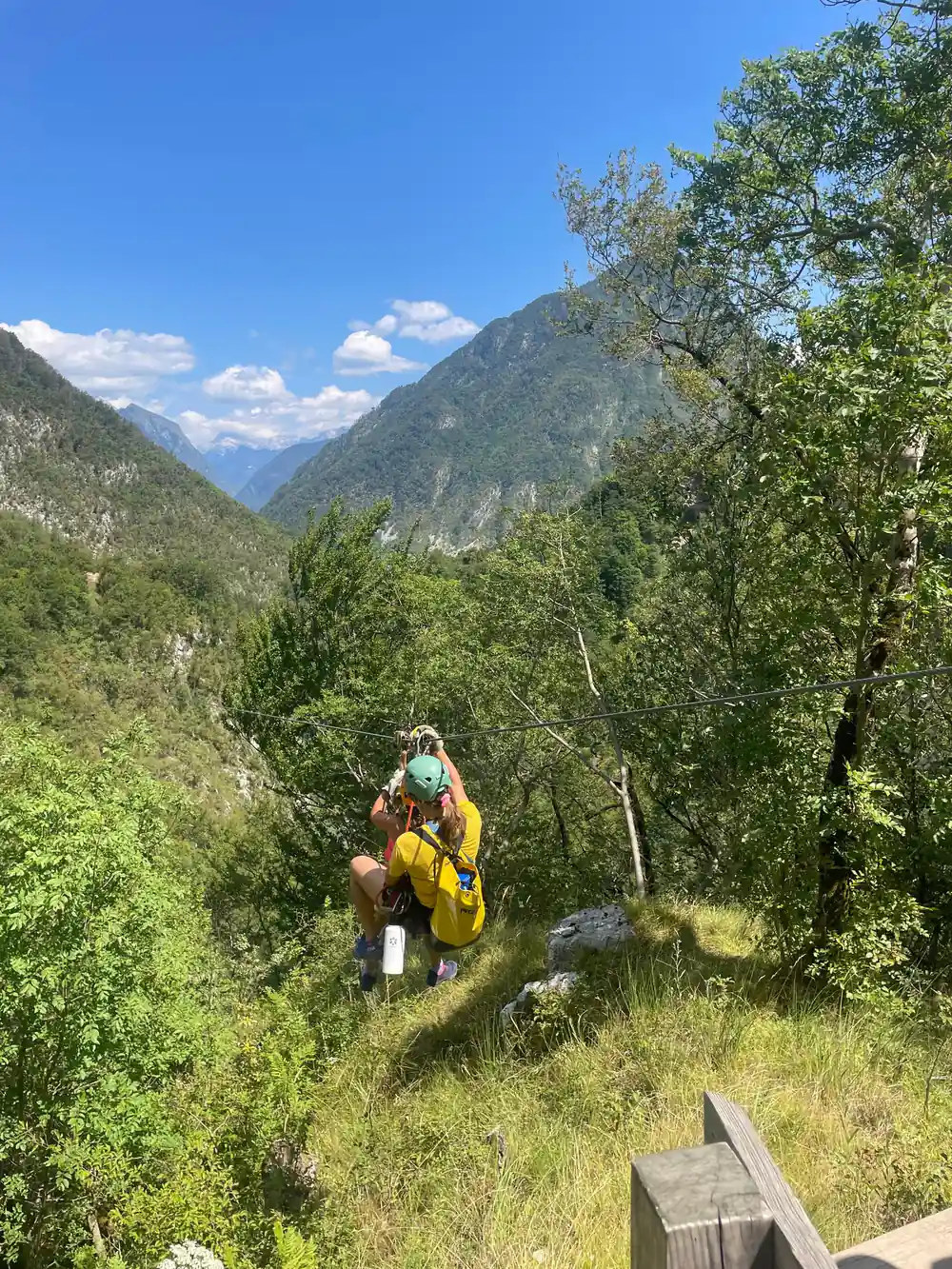
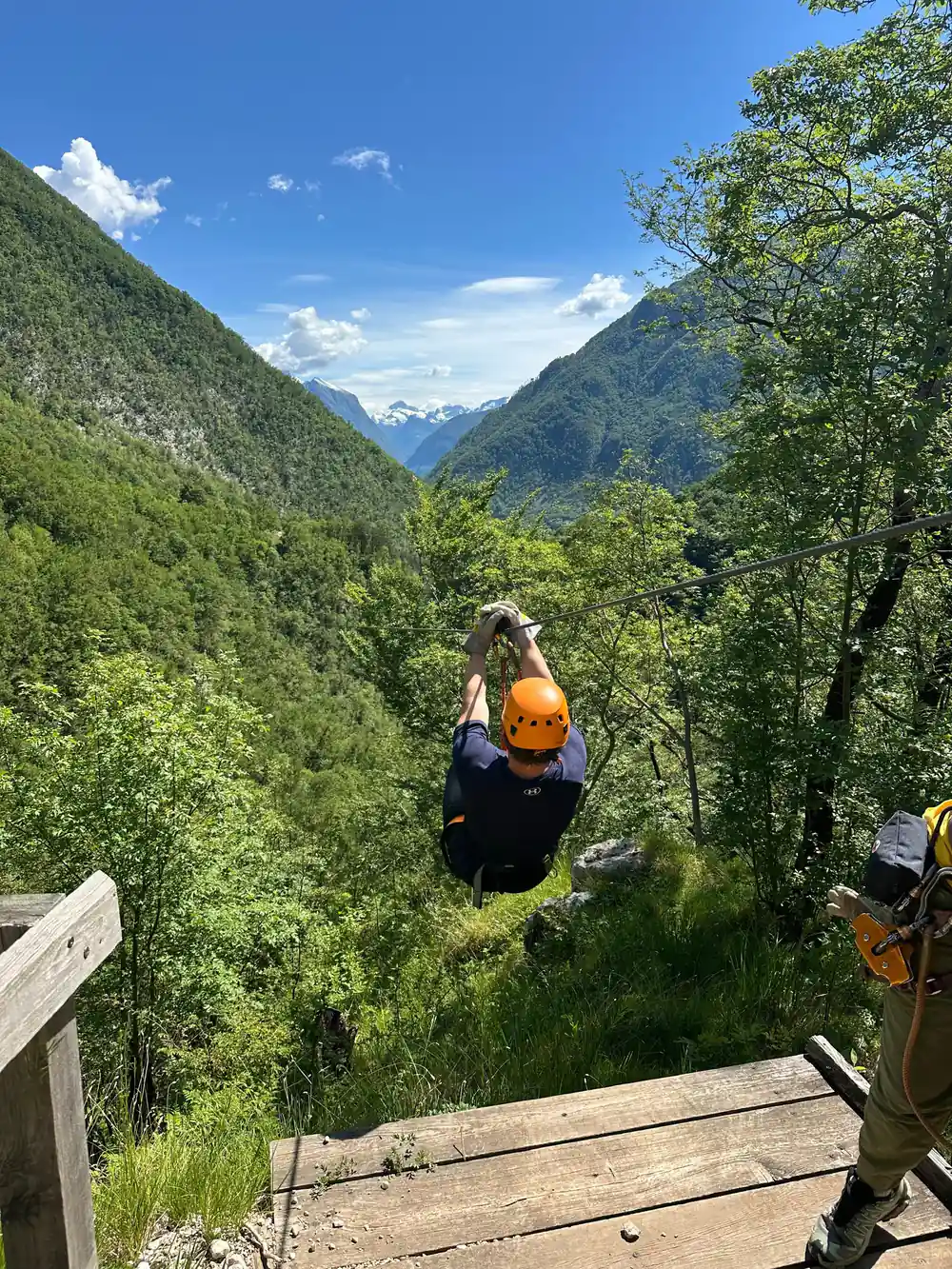
Each crossing starts on a small wooden platform built into the wall of Canyon Učja. Your gloves and helmet went on back at the sports centre in Bovec, so by the time you reach the platform there is nothing left to fit or adjust. A guide clips your harness to the line, checks the trolley is seated properly above your head, and waits for a nod before letting you go.
The step off is smaller than people expect, a shift of weight rather than a jump, and it is the one moment in the whole afternoon where you consciously choose to leave the platform. The canyon opens underneath you in a way no photograph prepares you for, and for a second or two the ground has simply stopped being where you left it.
When the Ground Stops Being There
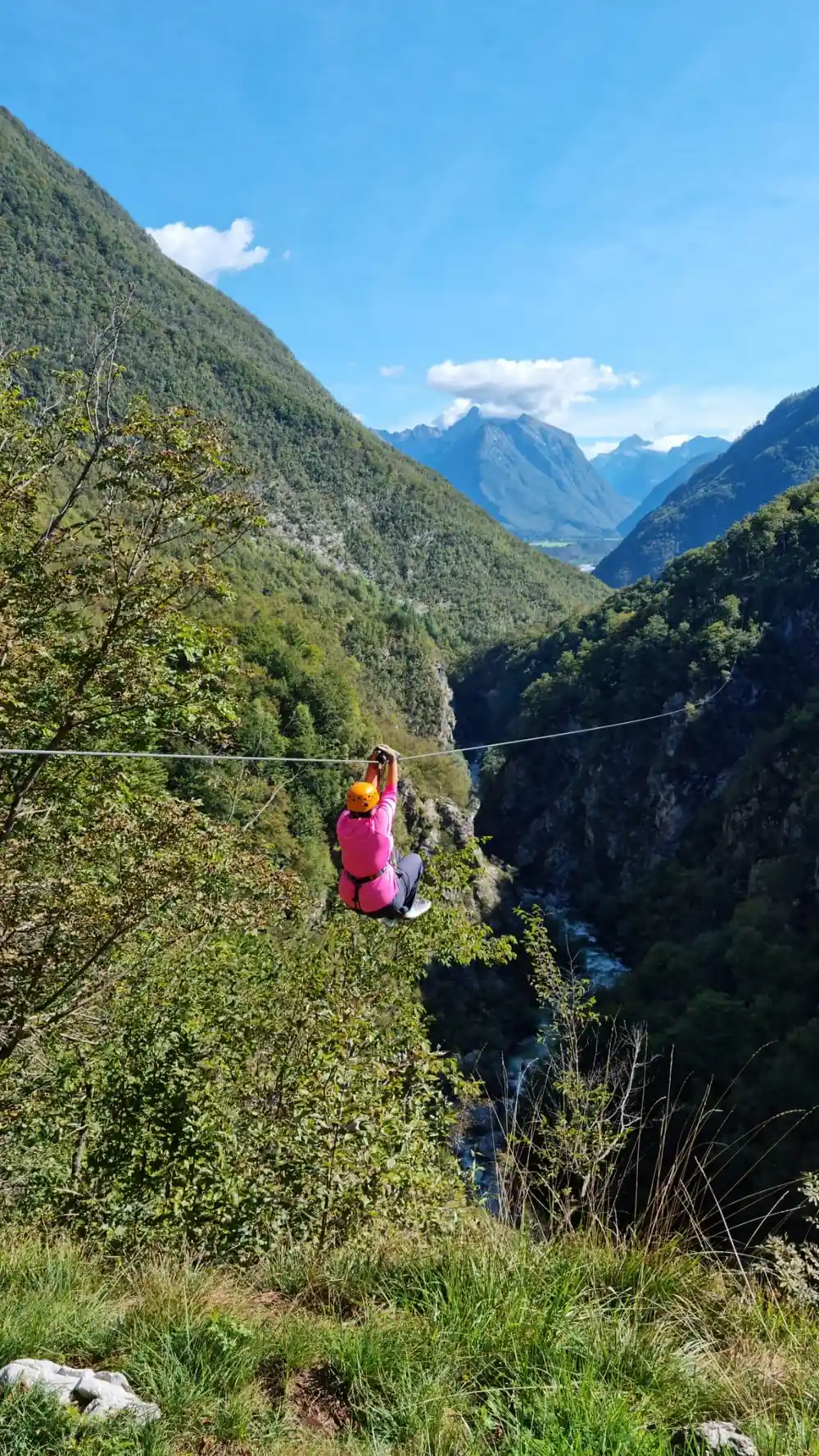
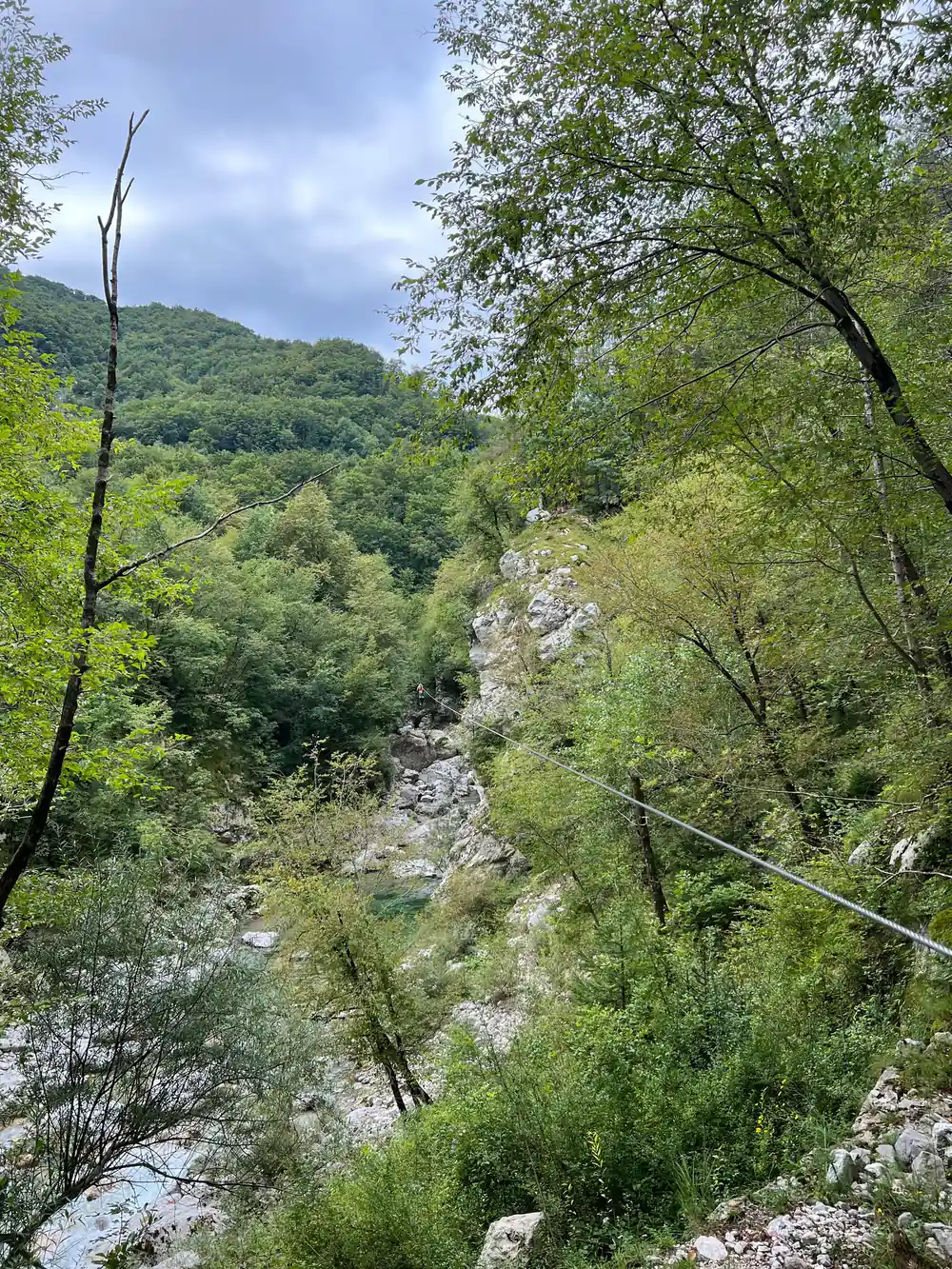
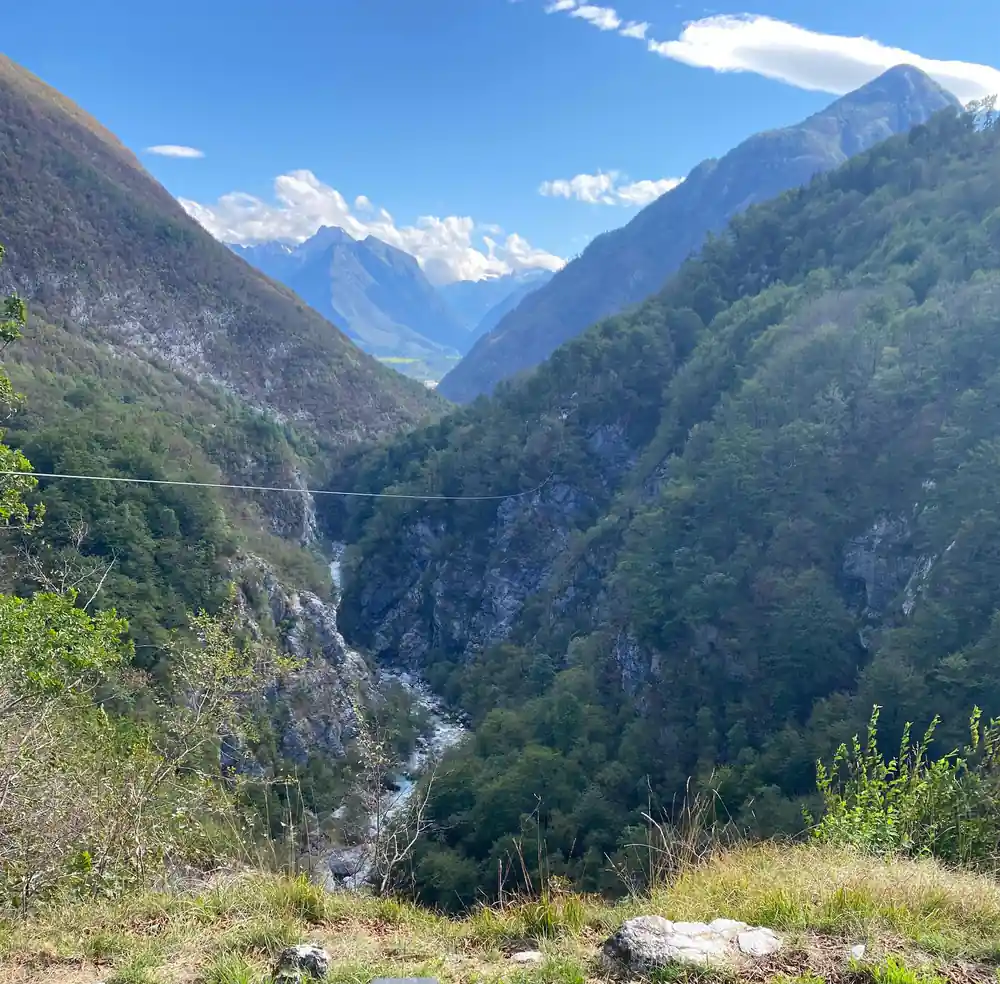
Canyon Učja is narrow and deep, with rock walls close enough on either side that you register them even while your eyes are fixed on the far platform. Below, the river and the tree line shrink to a single strip of colour, and there is nothing directly underneath the line to catch your eye or give you a sense of how far down it actually is.
That absence is the whole sensation. On a zipline strung over open ground you can watch the grass go past and get a rough sense of your own speed. Over a canyon there is no grass, no fence, no passing car underneath you, just a harness holding your weight and a long way of nothing beneath your boots.
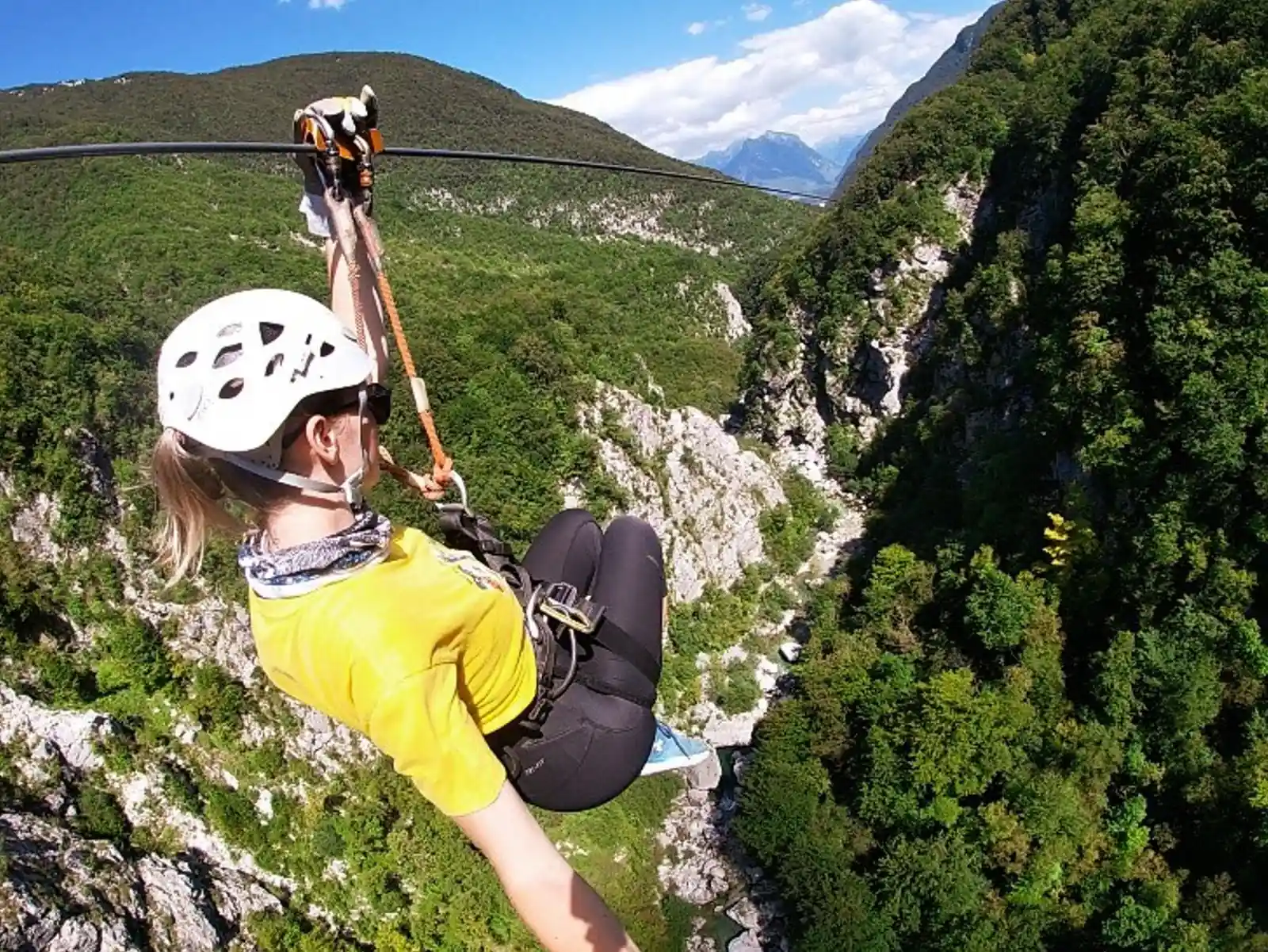
The platform view moments before the trolley takes you out over Canyon Učja
The Sound of the Trolley
The loudest thing on the crossing is not you. It is the trolley running along the cable above your head, a steady mechanical hum that rises as you pick up speed and settles into a constant note once you are moving freely. Wind noise builds around your helmet at the same time, so the two sounds blend into one another rather than staying apart.
Near the far end the note changes again, a shift you learn to listen for on your second or third run more than you notice it on the first. It is your clearest warning that the platform is close, since the canyon walls give you almost nothing else to judge distance by.
Speed With Nothing to Measure It Against
Ask most people how fast they went and they describe a feeling rather than a number, because there is nothing alongside the line to measure it against. No trees close enough to blur, no road markings, no other rider to overtake. The canyon gives you space in every direction, and space with nothing in it reads as fast whether or not it actually is.
That is worth knowing before you book, because it means the length of any single line matters less here than what is underneath it. A short run above a genuinely deep drop can feel more intense than a longer one closer to the ground, and Canyon Učja is built almost entirely out of the first kind.
3 hours
The booking runs three hours door to door, covering the drive up, the kit, the briefing and every crossing in the sequence.
The Guide Who Catches You
You do not manage your own arrival. A second guide stands at the far platform specifically to bring you in, slow your trolley and get you standing safely before you have to think about any of it yourself. Your job for the whole crossing is to hold the position you were shown at the briefing and let the equipment and the guide do the rest.
It is a small detail that changes how the whole thing feels. Knowing someone is physically waiting to catch you removes the one part of a canyon crossing that would otherwise be genuinely worrying, and it is why first-timers and confident zipliners tend to describe the same afternoon in almost the same words.
Why the Drop Matters More Than the Length
It is a fair question to ask how the lines here compare to others, and the honest answer is that comparing them by distance misses the point of the course. What changes how a crossing feels is the height of the drop underneath it, not the number of metres from platform to platform, and Canyon Učja was chosen for its depth rather than for how far apart its walls happen to be.
A shorter line with a genuinely deep drop beneath it will unsettle a confident zipliner faster than a long one strung a short way above the ground. Choosing where to spend an afternoon on the strength of a distance figure is asking the wrong question of the wrong canyon.
Deciding If Three Hours in Bovec Is Worth It
The booking runs three hours from the sports centre in Bovec and back, and that time covers more than the crossings themselves. It includes the drive up to Canyon Učja and back afterwards, fitting the kit, and a safety briefing before anyone reaches the first platform, so the time actually spent moving along a line is only one part of the afternoon.
For most visitors staying in Bovec or passing through the Soča valley, three hours is a manageable slice of a day that leaves the rest of it free for the valley itself. If what draws you to a zipline is the sensation of crossing open space rather than a figure on a spec sheet, that is what this afternoon is built around.
See what a Canyon Učja crossing actually feels like
from US$93Reserve now & pay later