Worth remembering
- Canyon Ucja is the gorge above Bovec where the zipline park is built, reached by a transfer from the valley floor.
- A canyon holds a zipline better than a hillside because the ground drops away at the very first step and stays away for the whole crossing.
- The Soca river runs through the valley below the gorge, with the Julian Alps standing around Canyon Ucja on every side.
- Transport up from the Soca Rafting sports centre in Bovec is included, and the same vehicle brings the group back down again.
The gorge above Bovec
Canyon Ucja is the gorge the zipline park is built inside, cut into the mountains above Bovec in Slovenia's Julian Alps. It is not something you pass on a road and glance at; the whole booking is organised around getting you into it, kitted up, and across it more than once before the day is done.
The park is run by Soca Rafting out of Bovec, a small town at the head of the Soca valley. Canyon Ucja sits apart from the town itself, which is why the day is built around a transfer rather than a walk-in: you arrive at the sports centre, and the canyon is somewhere the operator takes you, not somewhere you find on your own.
The drive up from the valley
The day starts at the Soca Rafting sports centre, at Hotel Soca on Ledina in Bovec, and you are asked to be there at least thirty minutes before your booked time. That buffer is not padding; it is when kit gets fitted and the group gets sorted before anyone leaves the valley floor.
From the sports centre, transport up to Canyon Ucja is included, and the same vehicle brings you back down again afterwards. You are handed gloves and a helmet, given a briefing by a guide, and walked to wherever the first line starts. A guide runs the whole sequence, so none of that time is spent finding your own way.
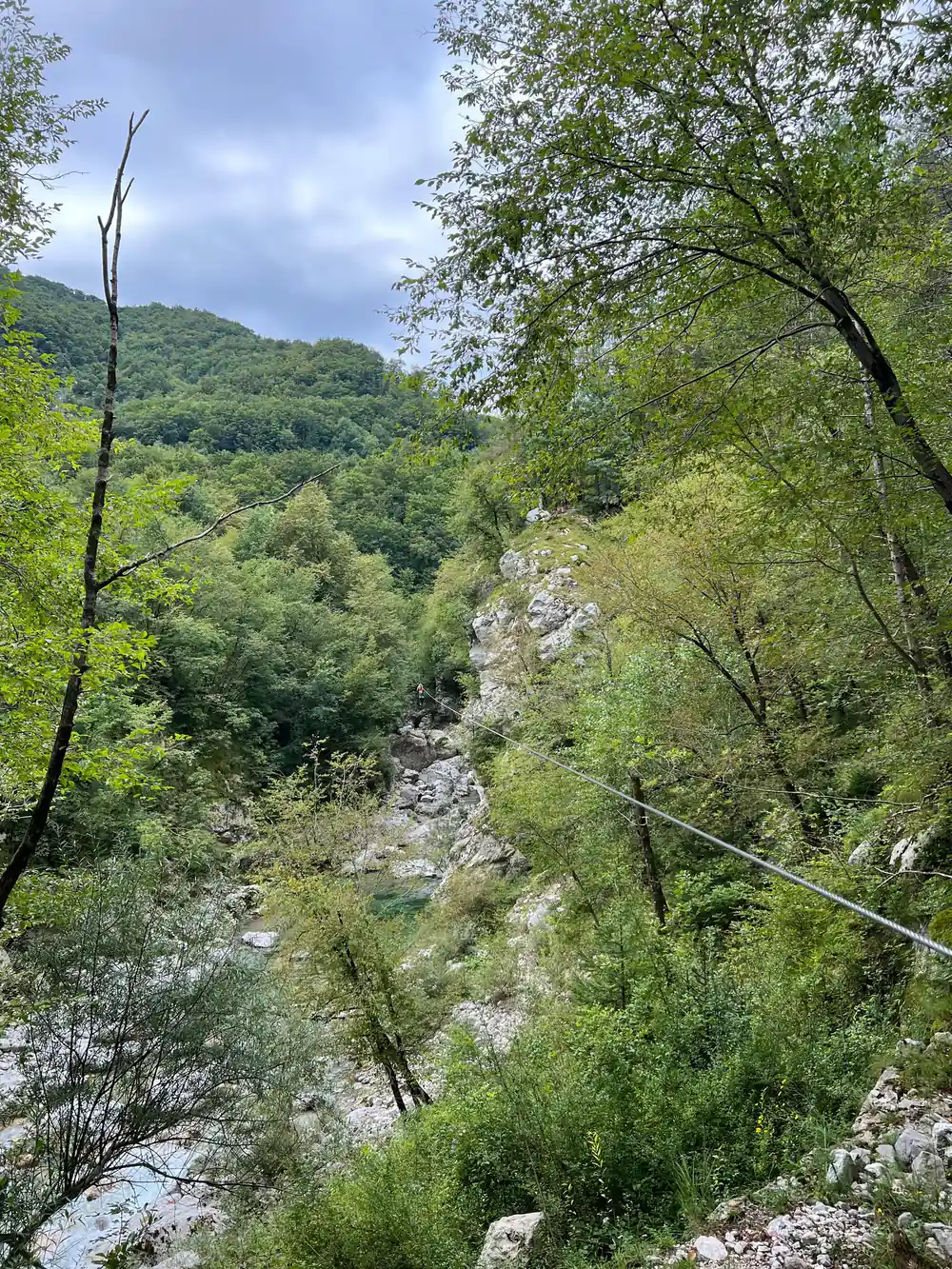
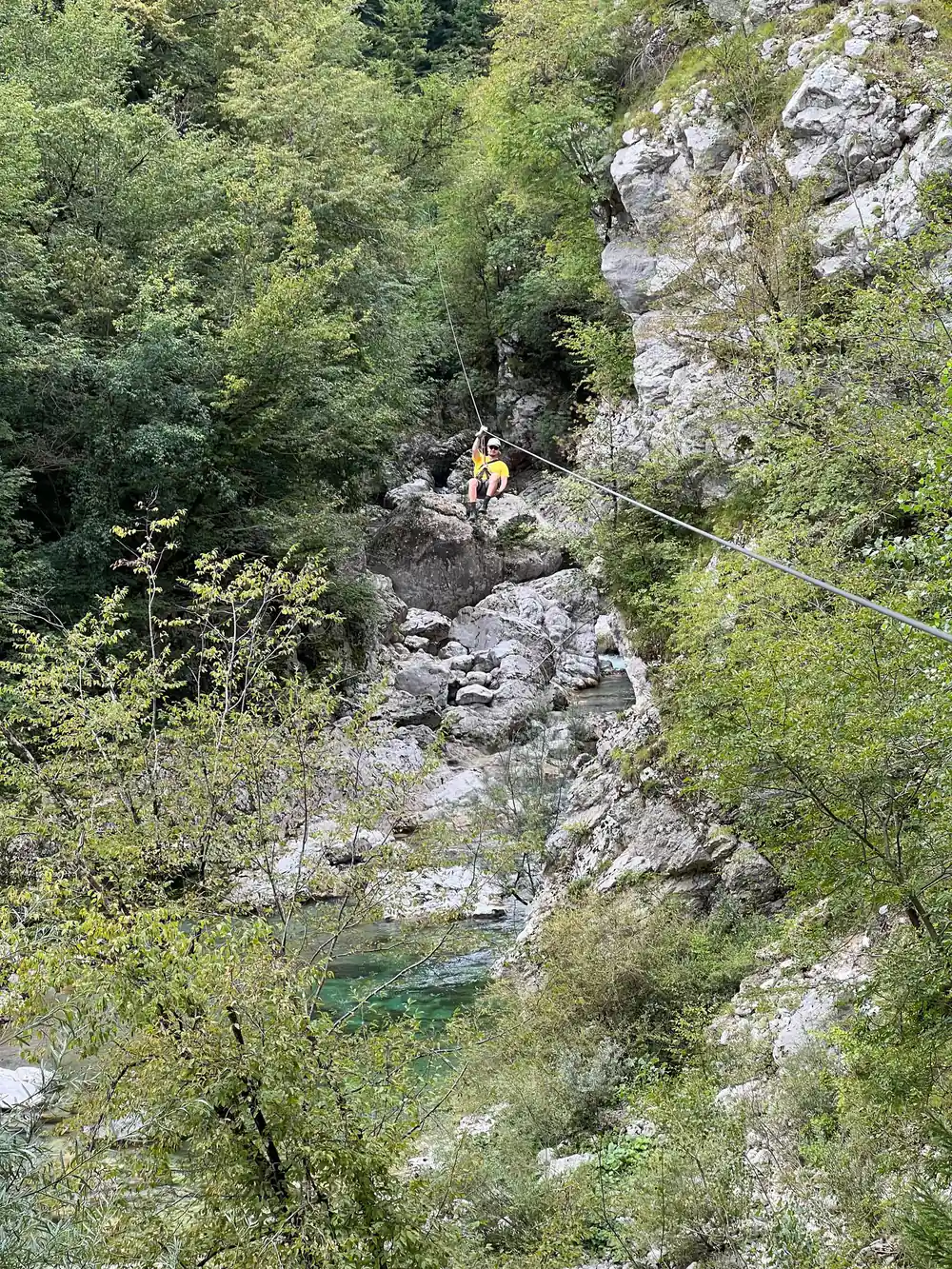
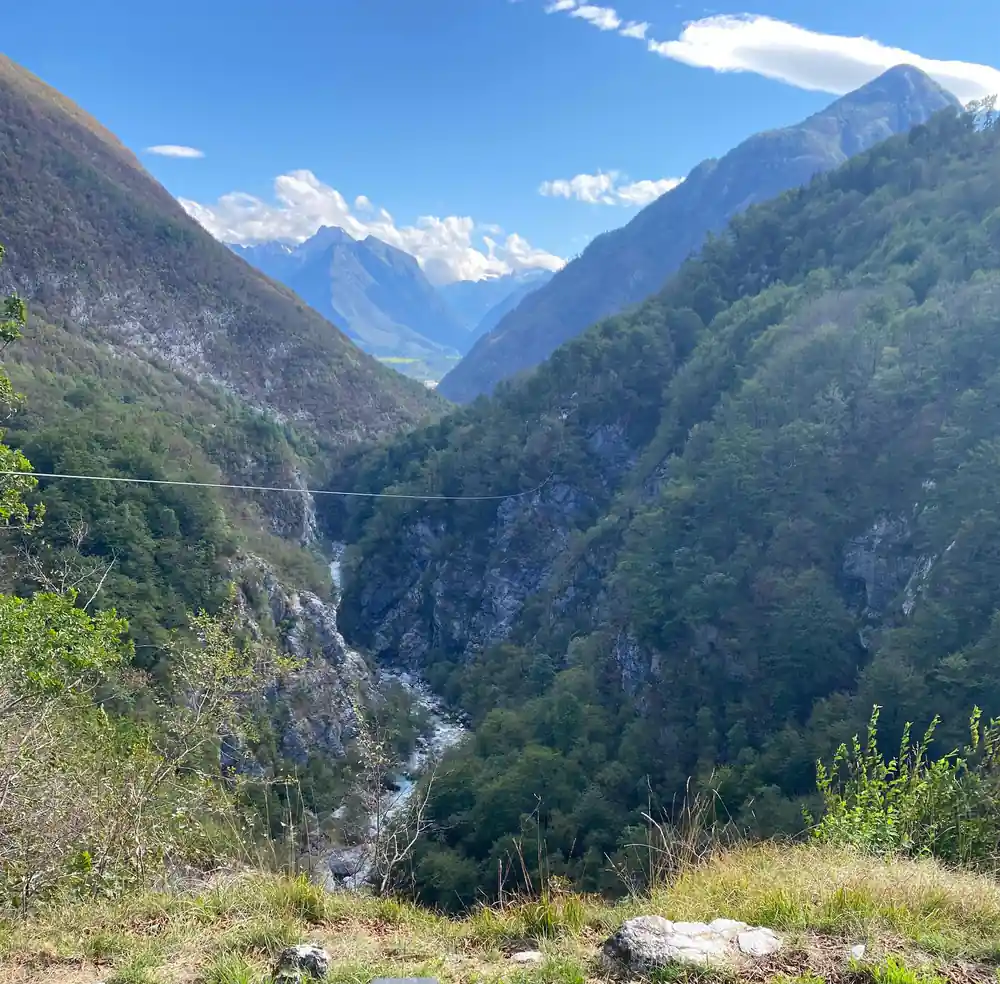
One wall of Canyon Ucja, seen partway across the gorge.
Why a canyon holds the lines
A zipline needs somewhere for the ground to get out from under you and stay out from under you, and a hillside is a poor place for that to happen. Run a line down a slope and for the first stretch you are still close enough to the ground that the ride feels like sliding rather than flying. The real drop only arrives once the slope has fallen away beneath you, and by then you are already partway across.
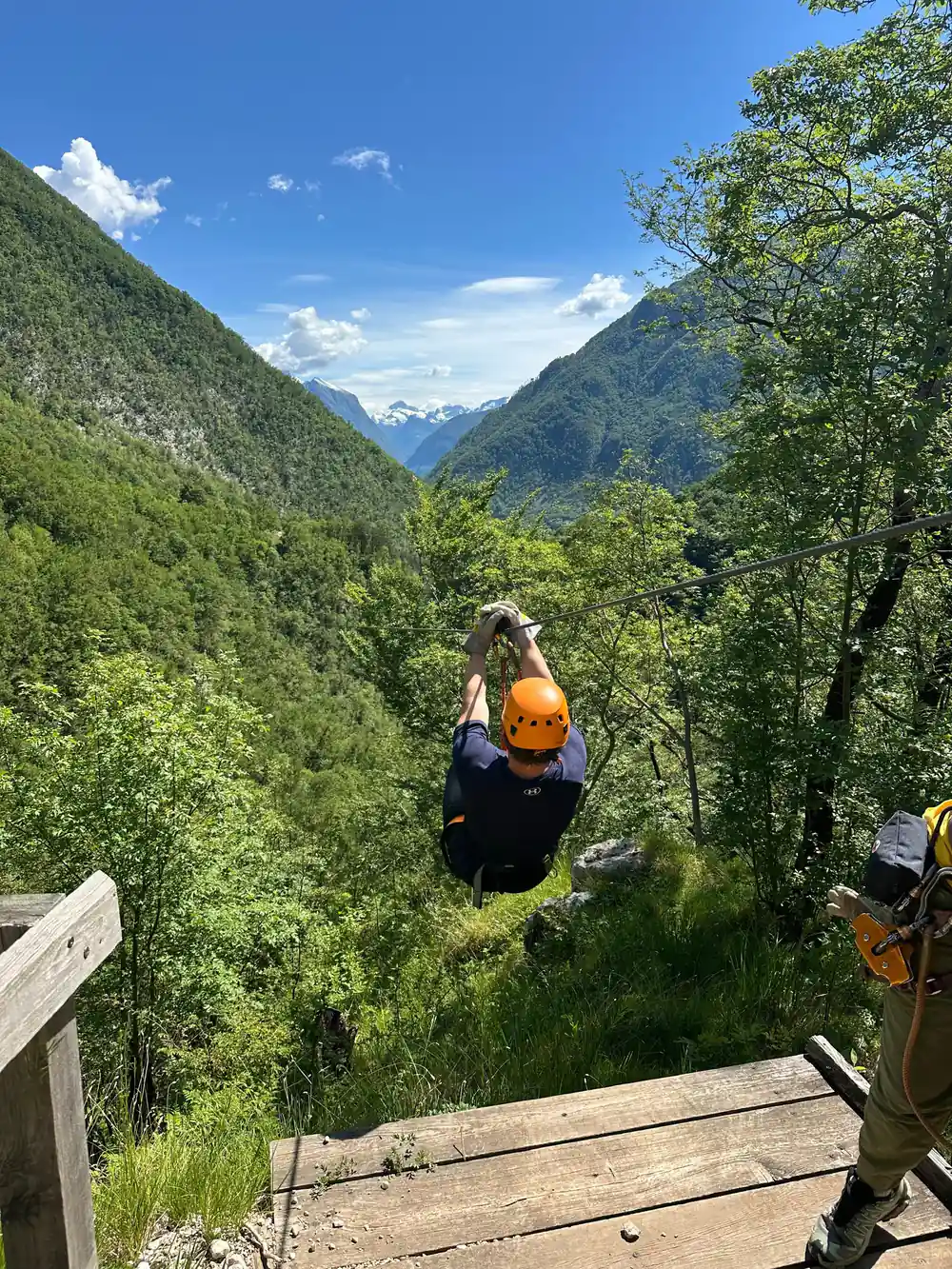
A canyon solves that problem by definition. The walls are close to vertical, so the ground is gone from beneath you at the very first step off the platform, not partway through the crossing. There is no gradual transition and no slope easing you in: one wall of the gorge, then open air, then the other wall.
That is the real difference between a park built in a canyon and one built on a hillside, and it has nothing to do with how far down anything is. It is about when the ground disappears, not how much of it there is. In a canyon it disappears immediately and stays gone for the whole crossing, which is what actually produces the sensation people come for.
Hanging in open air
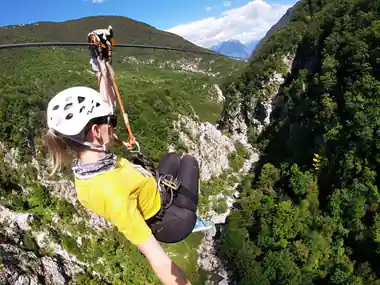
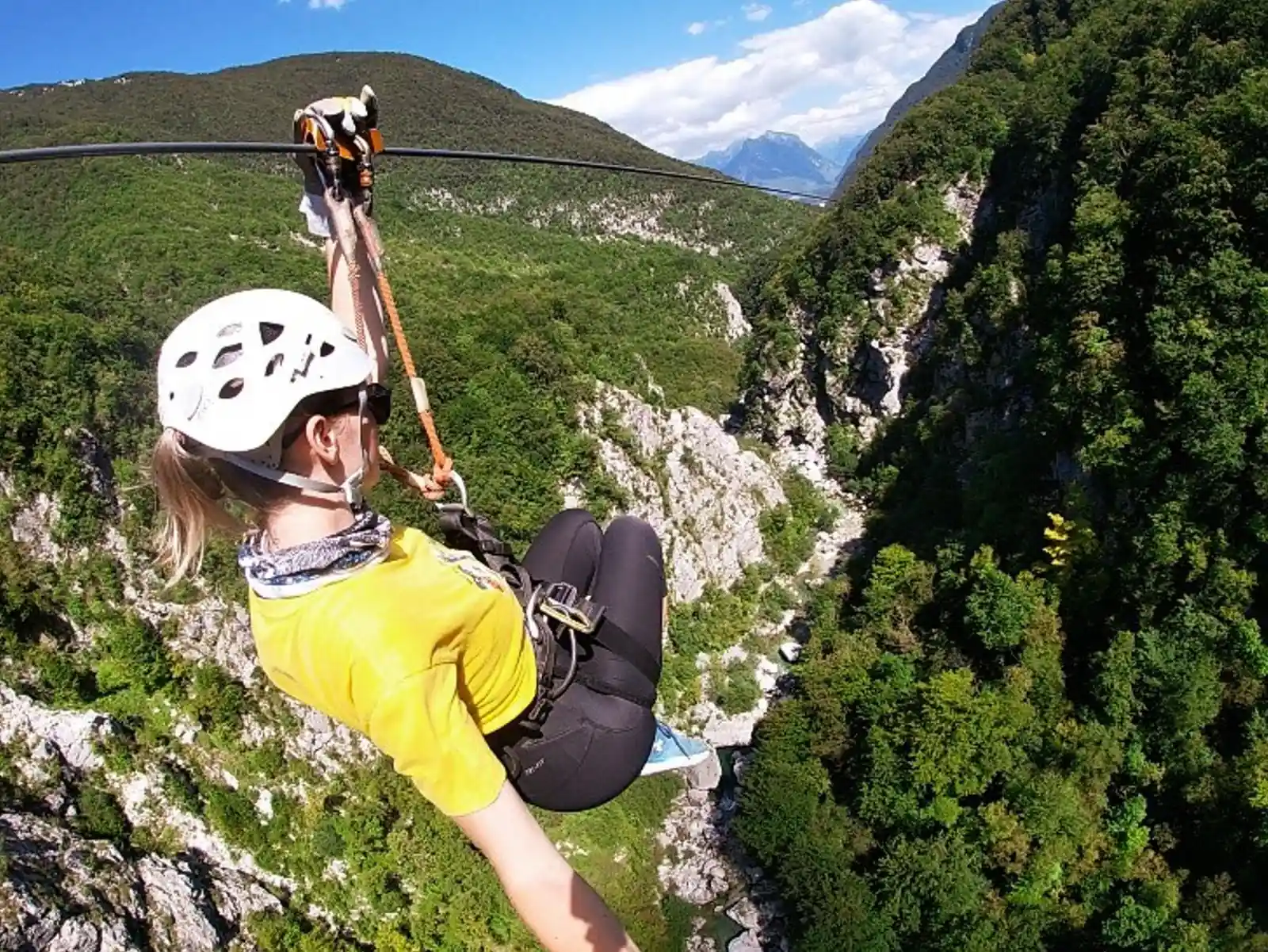
What registers, out over Canyon Ucja, is not a figure, it is the absence of anything nearby. No slope rising to meet you, no ledge within reach, nothing close enough to judge your progress against. The rock walls are there on either side, but they belong to the gorge itself, not to whatever is underfoot.
That absence is what a hillside zipline cannot really give you, because a hillside always has ground somewhere near you even if you cannot touch it. A canyon has none. Looking down, there is the gorge floor, the vegetation clinging to the rock, and whatever the Soca valley is doing that day, but none of it is close, and none of it moves the way a slope would as you pass over it.
The lines are strung from one wall of the canyon to the other, so the crossing has a rhythm to it: platform, open air, platform, and a fresh view each time you set off from a different wall at a different angle. It is a repeated experience rather than a single one, and each crossing shows a different slice of the same cut in the rock.
3 hours
The whole booking, from the sports centre in Bovec to the drive back down again, fits inside a single three-hour slot.
The Soca below, the Alps around
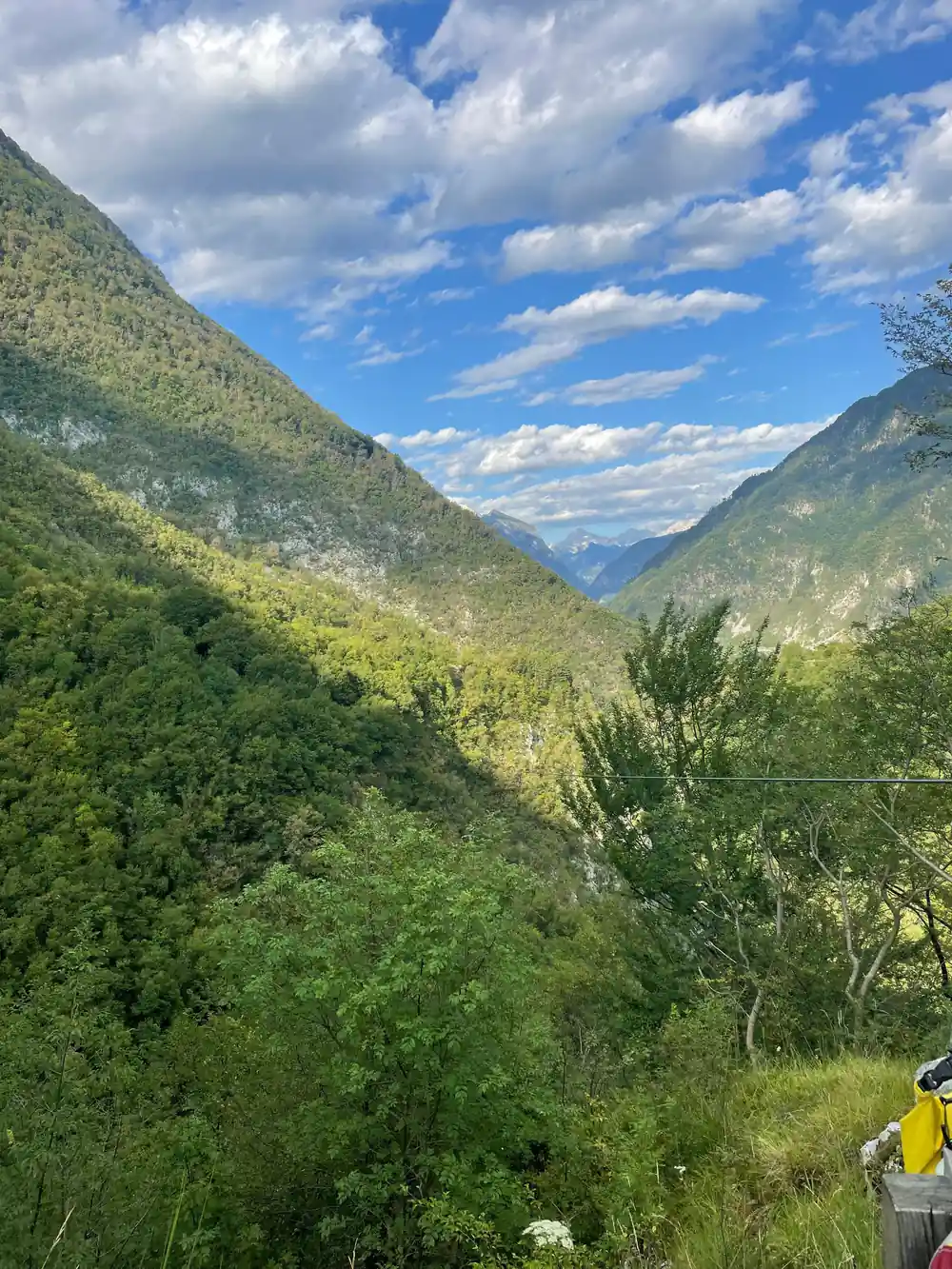
The Soca river, the one the whole valley is named for, runs through the valley below Canyon Ucja, and the Julian Alps stand around the gorge on every side. This is not a gap in flat ground; it is a cut in a mountain landscape, with peaks visible past the rim in whichever direction you look.
None of that scenery is arranged for the zipline. The Julian Alps stood there long before the park existed, and the Soca was already running through the valley before anyone strung a line across Canyon Ucja. What the park does is put you in the middle of that landscape for a few minutes at a time, hanging between two rock walls while the valley below carries on as usual.
Crossing from wall to wall
The shape of the day is simple even where the sensation is not: meet at the sports centre, travel up to the canyon, get briefed and kitted, then cross from one side of Canyon Ucja to the other, more than once, with a guide running the group the whole way. Guiding is offered in English, Italian and German, so the briefing works whichever of those you arrived speaking.
Afterwards, the same transport takes the group back down to Bovec. There is no walk out and no separate arrangement to make; the crossing itself, wall to wall over the gorge, is the part of the day that everything else in the booking exists to get you to.
See dates for crossing Canyon Ucja
from US$93Reserve now & pay later